USHUAIA OR BUST ROUTE MAP

8.16.2010

Gringitos. una propina . . .

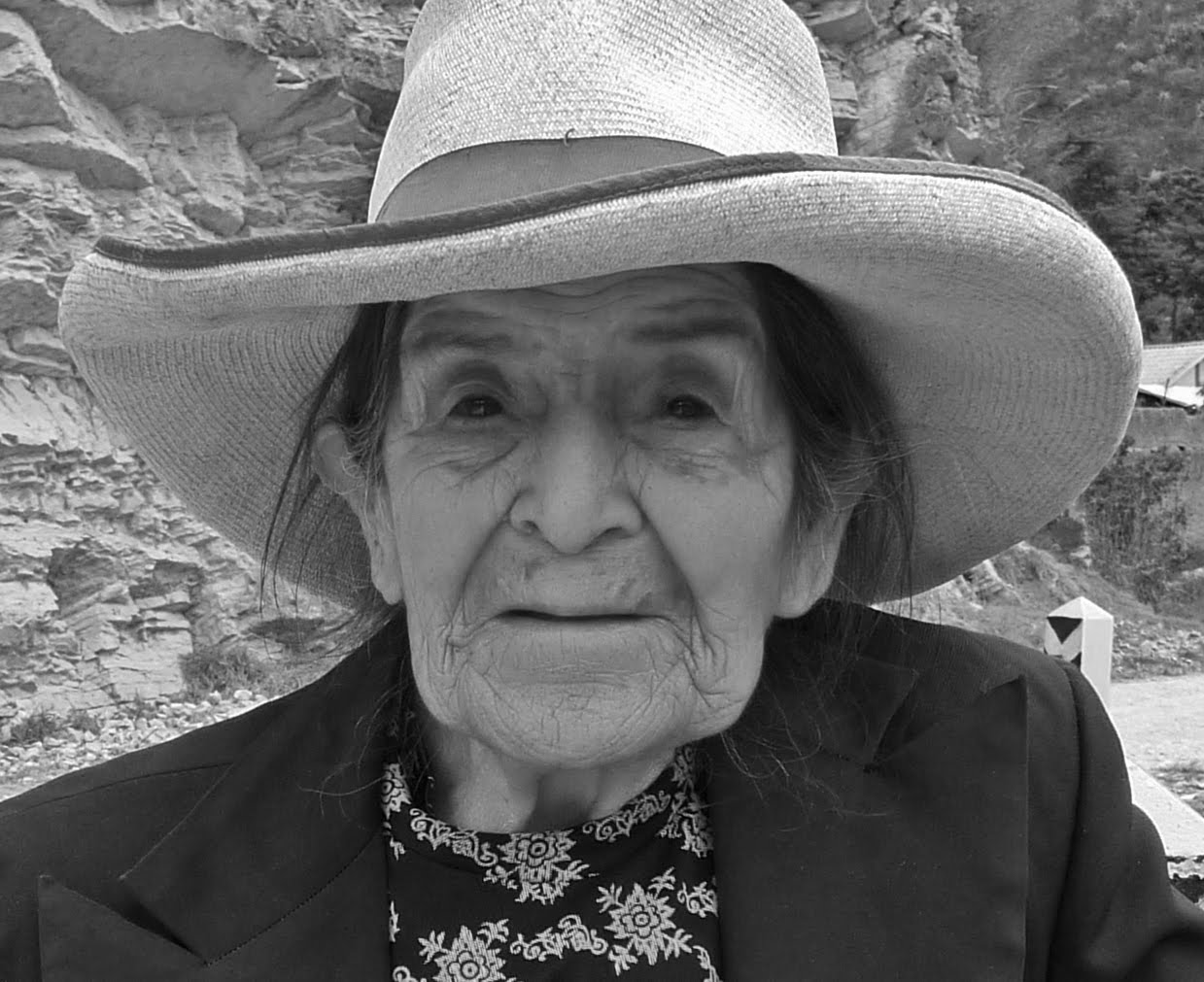
We were sitting on the Santo Tomas bridge eating lunch when she approached smiling and telling us not to fall into the river. ¨Gringitos,¨ she said, ¨una propina, por favor.¨ I gave her two soles for a photo in exchange. She was more than happy to have her photo taken then walked off.

Peru has no social security, her husband was probably long gone and children moved away to a place with more opportunity, if they were living. Hard to say no.

8.09.2010

Cruising to Chachapoyas


I left the swarming mototaxis of San Ignacio after a two day rest not sure what to expect but knew I was headed downhill and the road was going improve eventually to pavement. There are few private vehicles in Peru, maybe one in 15 vehicles that I see are private transportation. Mototaxis (3 wheeled motorcycle) are the most common, then corolla station wagons, then vans (combis). So once I get out of San Ignacio the roads are quiet and good thing because I need the entire breadth of the road to maneuver around pot holes and move to the outside of turns. Once again glad for my full size mountain bike tires while dropping 1000 meters to the Rio Chinchipe. Along the river valley I figure out it is going to be a hot and dusty day dodging pot holes. But gradually bits of tattered pavement appear as I head downriver toward Bellavista where I plan to catch a boat across the Rio Maranon. The landscape reminds me of the Western Slope of Colorado with its big river and high dry mountains - except for the banana trees, of course.

The few towns along the road are on the opposite river bank requiring a cable guided ferry to access or just a cable. People are friendly and curious - a family of three plus a chicken stop on their motorcycle to chat and gave me their cell phone numbers if I needed anything. Though, I do get tired of being called gringo all day by endless children and adults by the road. Gringo! Gringo! I feel like a rare animal sighting, which I suppose I am.As the river valley broadens I begin to pass rice paddy after rice paddy, endless rice. I love rice, rice feeds the world, I eat rice 3 times a day, and the rice here is sweet with a little bite at the center. I watch people prepare rice paddies, plant rice plants, paddies with bending stalks heavy with grains, paddies already harvested – all stages of rice production happening at one time. The growing season here does not change - 12 hours of light and 12 hours dark, always warm, always sunny, all the water you need coming down from the mountains. A quintessential pastoral landscape appearing timeless, simple, and honest. Oxen harnessed in the field. The bottom lands an endless even green that I pass accompanied by the constant babble of water flowing over the paddies, hunting cranes perched over the beds, bordered by papayas, bananas, and corn. The landscape is pregnant with life and all things good to eat. But I stop at a small tienda to buy a coke and to sit on the stoop as men pass on motorcycles with chemical sprayers strapped to their backs, I see figures prostrate in water to their shins plugging rice plants into paddies under the same hot sun I ride under . . . How much does rice cost? How much do you have to grow to make a living? The homes I pass are wattle and daub (woven sticks plastered with mud). Who owns a truck to bring their rice to market? Do all these children have schools or teachers? An easy landscape to romanticize but you can only do that for so many hours sweating on a bike. Towards dark I turn off the paved road onto dirt to Bellavista and more rice. The town is small and sees few foreign tourists . . . but it is on a road that dead ends at the Rio Maranon. I roll into the plaza and begin conversation with several men leaning on their mototaxis, as more gather I am directed to a hospedeja (small hotel) on the plaza and check in for the night (10 soles).Come morning I drink my cold instant coffee and work on my bike for a couple hours - changing back to road tires and tightening loose bolts. After a breakfast of soup, rice, yucca, and beef I head down to the river bank along a rough dirt track through rice paddies to catch a small motor boat to the other side. The crossing is not heavily used but saved me over 50km of riding through the city of Jaen. I head away from the landing on a sandy track passing a PetroPeru facility and helicopter pad to the main highway. The road is in decent shape paralleling the Rio Utcubamba heading upstream. Over the course of 80km the valley begins to narrow heading higher upstream steadily climbing but rarely steep (with a few notable exceptions). Road construction is interspersed throughout whether it is crews hand scraping guardrails to be repainted, paint crews hand painting center lines, or heavy machinery routing the road through landslides. They are friendly and encouraging - I sometimes think I must be winning the race . . . I think they welcomed the distraction. Also, dump trucks in Peru are the friendliest yet. Approaching Pedro Ruiz the canyon is filled with the sound of rushing water and parrots nesting in the cliffs. Once again, I pull into Pedro Ruiz at nightfall to check into a nice hospedeja in the town center (10 soles), take a cold shower (only option) and eat. I realized I have covered as much distance in the past two days as the last week (over 200km).

The next morning I resume my climb up the Rio Utcubamba anticipating a short 43km day, according to the map. I pass coffee laying out to dry beside the road which means I climbed over 1000 meters yesterday upstream to get over 2000 meters where coffee is grown. The road is quiet and beautiful as the canyon narrows - I was going to try out my new fishing pole but the no fishing signs were a little too obvious for me to plead ignorance. The canyon narrows down enough that the road is cut into the side of the wall. Eventually, the road turned off for Chachapoyas at 40km meaning I had 10km to go . . .

Well, I can't say I was not warned . . . but then at 50km the city was not in sight! Just plain rude, I thought. However, I did get some good views of the valley I climbed out of . . . and will descend to leave. Chachapoyas is pretty small so I quickly find the central plaza and walk into the first hotel to start shopping but am really thinking about eating a chicken. . . and who is there but Dylan with an extra bed is his room. Small world, indeed.


8.05.2010


Not sure what is going on here . . . humor? Initially, I did not notice it was written in English and could not figure out what was being said. I thought, "uh, that's strange the guy must be Arabic." But I noticed another roadside cross with English words a couple days later. . . Nobody actually speaks English around here other than "hello" and "mister," of course. Anyhow, you certainly did not want to go off the road.

8.03.2010

Out of Loja and into Peru

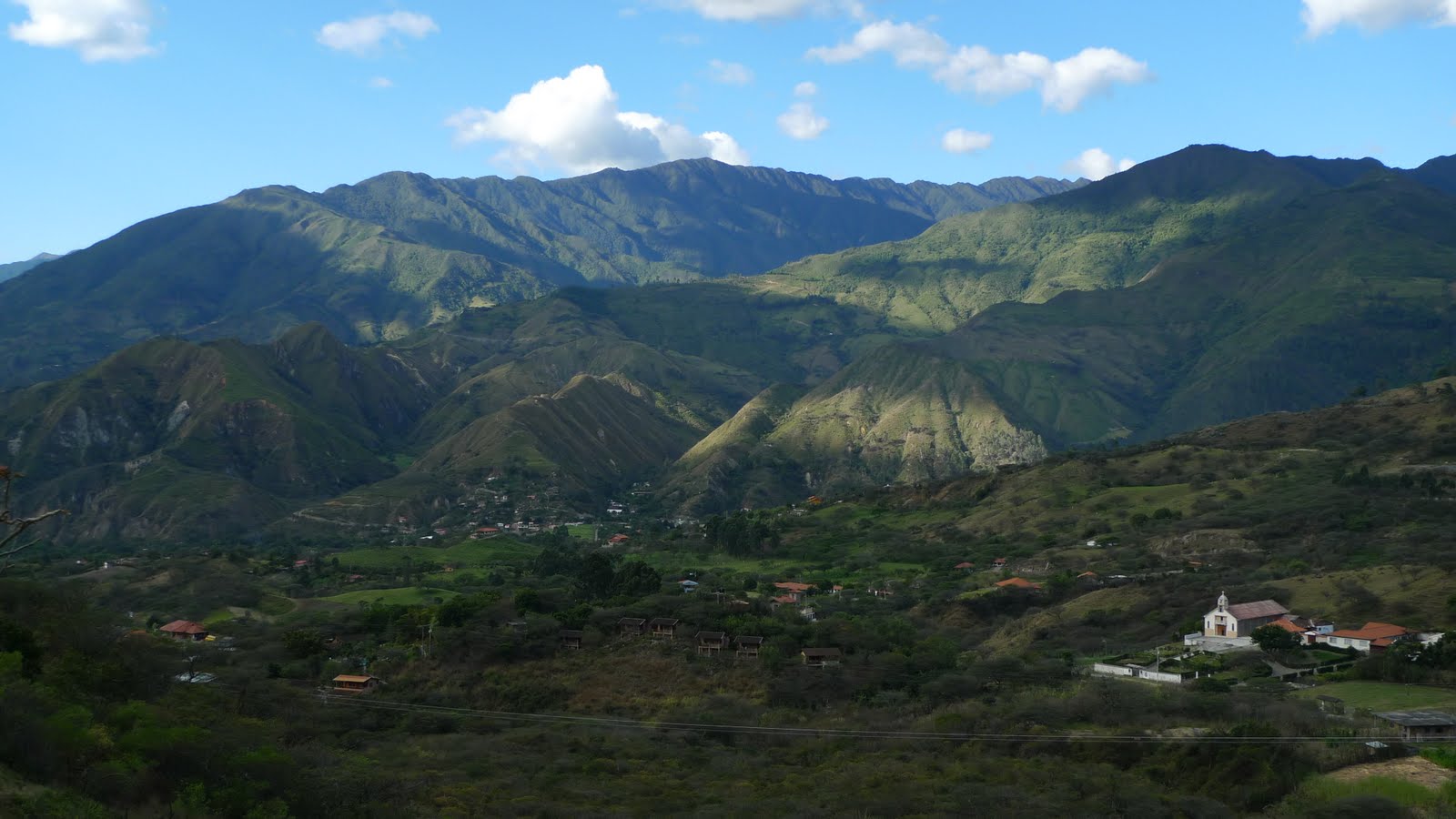
After climbing out of the Amazon Basin I spent a few rest days in the city of Loja, Ecuador before heading out on what I knew was going to be some tough riding into Peru. A beautiful little university city with lots of book stores, cafes, and a nice central market - the perfect place to spend some time eating and sleeping - the sort of place I could live. I stepped out to find an electrical plug that screwed into a light socket because my room lacked outlets, a common problem, and on my fourth or fifth electrical store found what I was looking for plus a nice array of fishing supplies. I had sent my fly rods home when I realized they were not getting used . . . but after passing over river after river in the Amazon Basin I regretted not having a fishing rod and I am headed for endless trout country through the Andes - bolete mushrooms and trout are a wonderful combination. Oswaldo was an avid fisherman, understatement, and after thinking it over for a day or two I returned to buy a lightweight spin setup. Initially, he treated me like a novice but when looking over his Mepps lures I made a comment that endeared him instantly. I said, "I do not think dots make any difference, fish are not that smart,"referring to the blades, "presentation is more important". "De acuerdo!," he replied, "you are a fisherman." Then we talked fly fishing, fish, and I told him about the mighty Susquehanna River that I stand in 3 days a week. A great transaction and I bought exactly what I needed. And I learned some new Spanish fishing vocabulary.Before leaving town I purchased a PVC tube for the rod at a hardware store, and the reel et al fit into a small tupperware making for a compact setup. I look forward to sending fishing photos to friends at work again!I rode out of the valley Loja sits in for my last few hours of pavement in the weeks to come passing through a series of small communities including Vilcabamba, enough said there . . . I don't care if Lonely Planet likes it - I do not actually have a guide book.The next few days would entail rough dirt roads through little towns, if anything at all. I slung my hammock and camped at the top of a pass just beyond Vilcabamba. I fell asleep by 8pm and woke around 5:30am to lay in while the sun rose. Within 10-15 kilometers of riding the road turned into a raw gash through the mountains at the small town of Yangana. 80% of the traffic was dump trucks working on the road creating a hellacious washboard on the inside of turns and raising clouds of dust - reminded me of the suffocation deaths of the 1930's Dust Bowl. The road would have been largely empty if not for the road work. The scenery was amazing and the climbing continuous, each descent was followed by climb that rose yet higher. Grinding along at 7 kph I wondered why the hell can't I go any faster?! But I realized I had been steadily climbing since the Amazon Basin and was somewhere in the neighborhood of 9000+ feet at the top of climbs . . . less oxygen equals less strength equals less speed. Views like this made me realize I had a lot of climbing to do . . . but at least construction ended. I had a long downhill through a cloud forest type environment into the river valley where the small town of Palanda sat. I assumed it was a cloud forest because of large Gunnera crowding the, already narrow, road and an abundance of epiphytes. I checked into the small Hotel Merino and everyone was pretty damn curious also it was Saturday afternoon and a lot of men were pretty damn drunk. After the sun set the party really started and continued until dawn but as the sun rose the church choir started and the streets cleared of drunks . . . mostly.The style of drinking was Andean meaning you shared one cup and a single large beer, pour yourself a small serving, drink it then pass the beer and cup along, when the bottle is empty open another, repeat. Also, drinking is for getting drunk, as in I can barely walk drunk, not for just having a beer. This is something to keep in mind if you are invited drinking - it is going to be a long time drinking and impossible to keep track of how much you drink. Anyhow, I always travel with earplugs so the ruckus did not bother me. Next destination was the border town of Zumba. I was not sure how far away it was but I knew the road was in worse shape, it was about two hours by car, and closer than Yangana - nobody knows actual distances. The road was wickedly steep at times but thankfully the altitude was lower - coffee growing altitude, so about 2000 meters. Bags of coffee beans were stacked everywhere or were laying out drying on tarps.I followed the river valley until climbing up over a ridge to descend into another river valley then climb over another ridge to Zumba. I arrived and considered moving on to the Peru border which was close on my map but everyone said it was a 1.5-2 hour drive on very poor roads . . . so 3-4 hour ride time and I had less than 3 hours of light after eating. Zumba was friendly and I spent the my Sunday afternoon meeting locals. A nice farewell to Ecuador. Also, I had a good view from the hotel roof of all the mountains to come. The town was slow in the afternoon and I chatted with an old man sitting on the street who showed me his artifact and fossilize tree collection. We shared some of his local fruit liquor that was extremely tasty. The artifacts were 2-3000 years old including carved stone offering bowls, small human figures, faces, seals, weapons, tools - all for sale. Archaeologists flip over the selling of artifacts because they are removed from their context and destroy any chance of understanding their larger cultural context. However, if you are poor and they are just sitting in caves in the hills and people pay money for them . . . not the first time I have been offered artifacts. I was wondering about getting food later in the evening because everything was closed but after the sun went down everything reopened and people came out onto the streets. I was even able to buy beer on my last Sunday in Ecuador from a woman in a small store.
The next morning shortly after leaving town I sliced my mountain bike tire on something in the road. While black flies ate me alive I patched the tire and repaired the tube - hopefully it is good for the next few thousand miles. The next 25k was short, steep and wet without much between Zumba and the border except a couple very small towns and military check points. After 2.5 hours riding I crested a ridge and looked down on the border with Peru!Talk about a quiet border crossing. Ecuador had one officer there working on his motorcycle and Peru had three officers but the migration official was taking a long lunch at home and the police officer was napping. I sat and chatted with a Portuguese woman agronomist (in Spanish), had lunch, drank a beer, and waited for everyone to wake up. I finished up my Peru paperwork by 3:30pm and woke the police officer to stamp my Andean immigration card - he did so in his underwear. I was not going to make San Ignacio that day so I stayed at a small hotel in Namballe, Peru, ate dinner, and chatted with a pair of drunk brothers before going to bed early. I woke early, noted some new bed bug bites (itchy little bastards), reinforced my sliced tire with an exterior patch, and headed out for San Ignacio. Wow . . . I know I said this for each day but the road got worse. Big pot holes, mud, and lots of stones - I am very happy with my big wheeled Salsa Fargo and fat treads! These small steep mountains are real killers. More livestock in the road, as well.


I noticed a lot of small sluicing operations in the river around every bend you hear one motor fade and another motor come in - I assume for gold. After more dirt roads and long climbs I finally arrive in San Ignacio to take a much needed break. I am checked into a small hotel with a restaurant downstairs and wifi for $5/night - no private bathroom but that is ok because the water is usually not working . . . who wants that stink.

Perspective

always refreshing . . .

Vilcabamba . . . a rant

Anyone who starts a conversation with, “are you a vegetarian?,” I want to slap. Nobody starts a conversation with, “do you like eating animals”? Nothing against vegetarians, some of my best friends have been vegetarian . . . If I had the energy I might have moved on but I was parked in the plaza of Vilcabamba, and the burgers looked good. Peter, the friendly protein starved German with stringy hair, was not put off by my dietary choice and sat with me. Across from us sat a long white haired hippy dude rolling a smoke with all the attitude of a local who is not, while up strolled Tweedledee with a braided beard - I overheard their real estate conversation along with, “you are the least into money of all the people I know” . . . my digestion was being interrupted. Peter filled me in on the wonders of tiny Vilcabamba, besides no decent ATM, no color copies, no visible local market, Vilcabamba has a thriving expat hippy dropout community. Also, some of the highest real estate prices in Ecuador. Off hand I would not have guessed but the quaint realty store fronts were a tip off. I was encouraged to stick around and check out the free movie screening at the community center, “you will meet some really nice people.” The movie was about crop circles . . . I am open minded but aliens landing in fields in England – for the food, right? I am sorry but we are in the farthest reaches of our galaxy on the edge of an expanding universe, we are alone, nobody cares, and Gaia is waiting for our extinction. I pictured post screening sitting around sipping wheat grass and weak herbal teas seriously discussing the vagaries of alien contact – maybe if I was roaring drunk and she was really cute in that hairy dreaded sort of way . . . light on the patchouli. Even then, the idea of a “community center” in rural Ecuador showing a movie about crop circles in England to a bunch of landed expats with special feelings for vegetables is simply wrong. Peter was staying at a hostel (for $200 a month) that did sound appealing though – pool, sauna, good coffee, and cheap, with $6 dorm beds. I decided to roll up the hill and check it out. The place was packed with young Ecuadorians in the pool getting drunk – ah, a breath of local fresh air! However, it was booked with said Ecuadorians and available rooms not cheap ($20). Peter offered me some tea when I really wanted a cheap cigarette and a shot. I briefly considered the offer of free camping at the “community center” but kept rolling – as someone said, not my family, “if you don't have anything nice to say . . . “ I suppose I could have called Danny and Pedro for a good time but instead I climbed the next pass, slung my hammock, made dinner, and enjoyed the stars with cheap red wine . . . for free. Peter was a nice guy, I just don't always do nice. Incidentally, the burger was the best I've had in seven months, but not a 1/2lb Thirsty's burger.