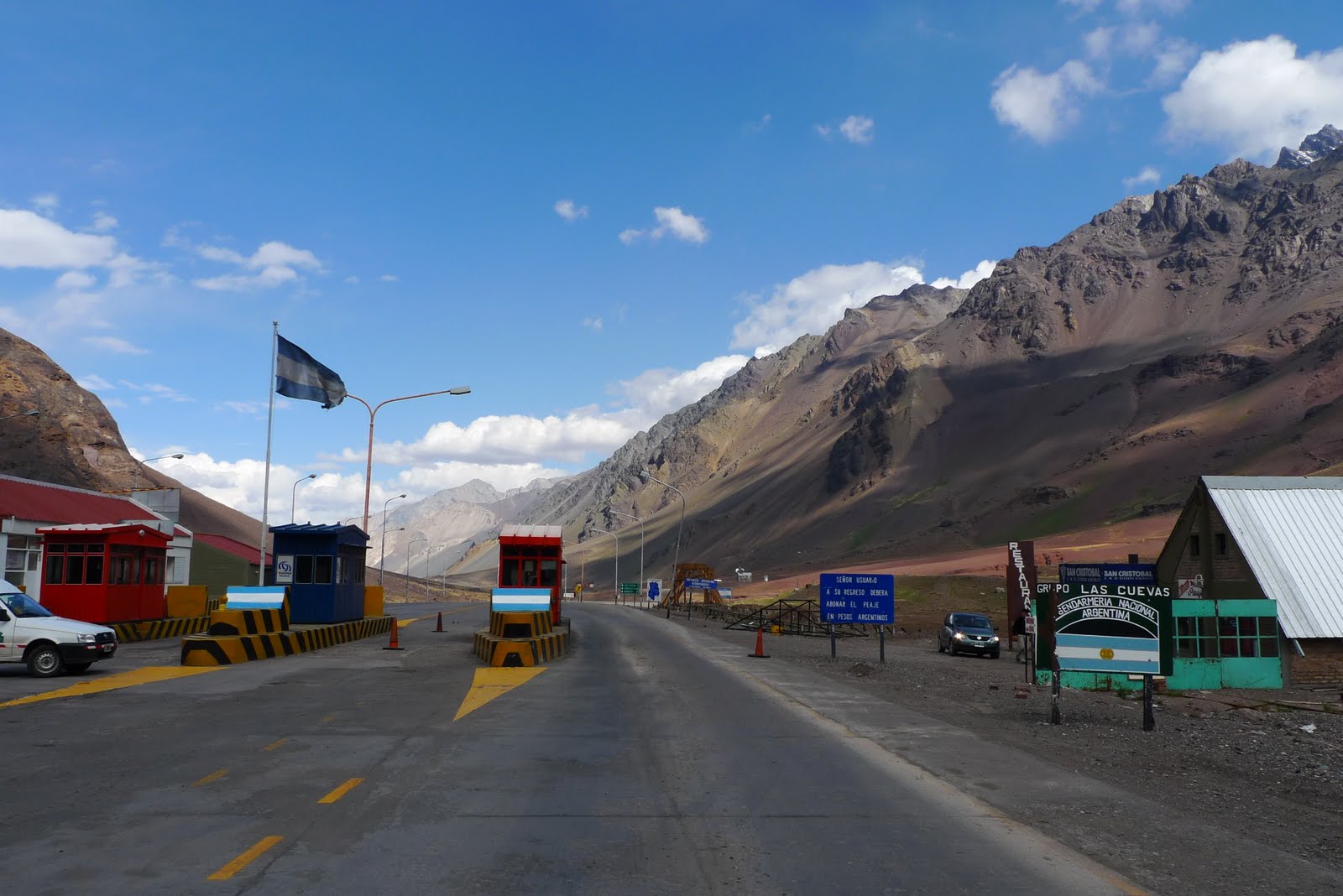
I finally tore myself away from Mendoza before I started looking for a job . . . but not until 3 in the afternoon - still managed to knock out 110km though. I passed by an uncountable number of small vineyards but only one huge sunflower field late in the day.

The riding was fast with the only hazard being the huge storm cells that built up in the afternoon and renown for their large hail but I rode between all of them. The provincial government has periodic shelters erected to escape from the hail and they made for shade as well on the treeless plains.

The giant cumulus make for some spectacular sunsets over the vineyards.

The landscape reminded my of Colorado except for the ever present Andes and vineyards.

Even the small tree filled towns - I camped the first night in the small town of San Carlos at a friendly hostel recommended to me by Daniel, the hostel owner in Mendoza. Argentinians camp a lot so campgrounds are pretty much everywhere - including municipal campgrounds in many towns and cities. I love being able to camp but walk to the supermarket to buy a hunk of flesh to throw on the parrilla (wood grill).

While I finally managed to get out of Mendoza, I stopped a day and half (260km) later in San Rafael for yet another late late night hanging out grilling with Argentinians. Also, met an American ex-pat, George, from Florida on my way into San Rafael living there with his family. We talked about how he enjoyed living in San Rafael despite Argentina's interminable struggle with inflation. George invited me to his home but after checking into a hostel full of Argentinians I was enjoying drinking mate and working on my Spanish.

I, also, met a couple Argentinian cyclists that will be a nice connection when I reach Buenos Aires.

I think this means go fast downhill . . . I like it but not much of a hill - sign must have been put up by flatlanders.

After San Rafael the country becomes pretty dry with small towns spread out. Camping is easy beside the road if you can find shelter from the wind but water is scarce.

However, I had more Argentinians stop to offer me water, cold soda and ask if I needed anything in two days than the entire two months in Chile - good thing I needed it - like I didn't need it in the Atacama . . . Along the way folks began telling me about a couple ahead of me that started in Alaska - eventually I caught up with Harry and Ivana at a roadside shelter where we ducked out of the wind, had breakfast together, and we rode together for the next couple days.

They have been on the road from Alaska since 2008 - go to http://elmundoenbici.com.

Also, been running into Argentinian nationals out touring which is a first for any country but evidently bike touring is very popular here - besides the fact that Argentinians like to travel in general.

They are checking out my bad ass ride!

Route 40 is the route 66 of Argentina but still the major/only north - south route on this side of the country. However, at times the road turns into a rough dirt road that may have been formally paved but has since been ground back into gravel.

The rough riding has been the demise of my Schwalbe tires after 15,000+km of hard touring - they got a rest in Peru where I used my mountain bike tires a good deal but I am very impressed with how durable they were.

I blew a hole straight through the casing and now have it booted and buttressed but it is only a matter of time before the tire blows again and I predict I will be rolling into Bariloche in 600km on my mountain bike tires. Good thing my sister and Matt are coming on vacation to Argentina and can bring me a new pair of tires to finish out the trip - along with some new bike shorts, my fly rod, coffee and peanut butter!

Patagonia is living up to its reputation for fierce winds but at least they move around so it is not a continual head wind . . . the side winds blow me straight across the road making for strenuous riding wrestling with my handlebars leaning sideways for hours while I barreling down hills at 60+kph waiting for the rear tire to blow again.

While the country is dry water flows down from the Andes and collects in high valleys or out in the plains.


Riding along the Rio Grande into northern Patagonia volcanic peaks dominate the scenery and the region has one of the highest concentrations of volcanic cones in the world and at times rivers carve narrow little canyons through lava rock.

The rivers and lakes are prime fly fishing territory and seems more people here use fly rods than spinning gear - a bit of a switch from home. I am really looking forward to having my fly rod so I can catch some fish because I don't seem to have a clue with spin gear unless I am catching walleye in the Susquehanna River.

Nevertheless, a beautiful place to camp and I still enjoyed waving my rod around at all the fish swirling on the surface eating something other than what I had to offer. They were obviously feeding on rising nymphs but you cannot imitate those with spinning gear . . . oh my kingdom for a 5wt and nymph rig!

Eventually, I had to climb up and out of the Rio Grande valley and spent several days looking at the same volcano from all sides as I traversed around it.

Passing through rolling plains and climbing into high valleys with very few people around.


Higher up animals are grazing for the summer and in the winter they will be brought back down into the valleys to graze.

I talked briefly with a gaucho who lamented that a three year dry spell has made grazing difficult and diminished the herds of cattle but I still see lots of goats in the hills.

I rolled into the green tree filled valley of Chos Malal for a rest day and writing after a 700+ km stretch. Chos Malal is a quiet little city and former provincial capitol but not for over hundred years now. Nevertheless, fairly prosperous due to the energy industry now controlled by the provincial government. I had an interesting conversation with a store clerk who was studying to be provincial police officer - evidently the province has the best pay and benefits for civil servants in Argentina, teachers and police, due to taking control of the energy industry from multinational corporations. Perhaps Peru could take a lesson from the Neuquen Province of Argentina . . .

 I finally tore myself away from Mendoza before I started looking for a job . . . but not until 3 in the afternoon - still managed to knock out 110km though. I passed by an uncountable number of small vineyards but only one huge sunflower field late in the day.
 The riding was fast with the only hazard being the huge storm cells that built up in the afternoon and renown for their large hail but I rode between all of them. The provincial government has periodic shelters erected to escape from the hail and they made for shade as well on the treeless plains.
 The giant cumulus make for some spectacular sunsets over the vineyards.
 The landscape reminded my of Colorado except for the ever present Andes and vineyards.
 Even the small tree filled towns - I camped the first night in the small town of San Carlos at a friendly hostel recommended to me by Daniel, the hostel owner in Mendoza. Argentinians camp a lot so campgrounds are pretty much everywhere - including municipal campgrounds in many towns and cities. I love being able to camp but walk to the supermarket to buy a hunk of flesh to throw on the parrilla (wood grill).
 While I finally managed to get out of Mendoza, I stopped a day and half (260km) later in San Rafael for yet another late late night hanging out grilling with Argentinians. Also, met an American ex-pat, George, from Florida on my way into San Rafael living there with his family. We talked about how he enjoyed living in San Rafael despite Argentina's interminable struggle with inflation. George invited me to his home but after checking into a hostel full of Argentinians I was enjoying drinking mate and working on my Spanish.
  I, also, met a couple Argentinian cyclists that will be a nice connection when I reach Buenos Aires.
 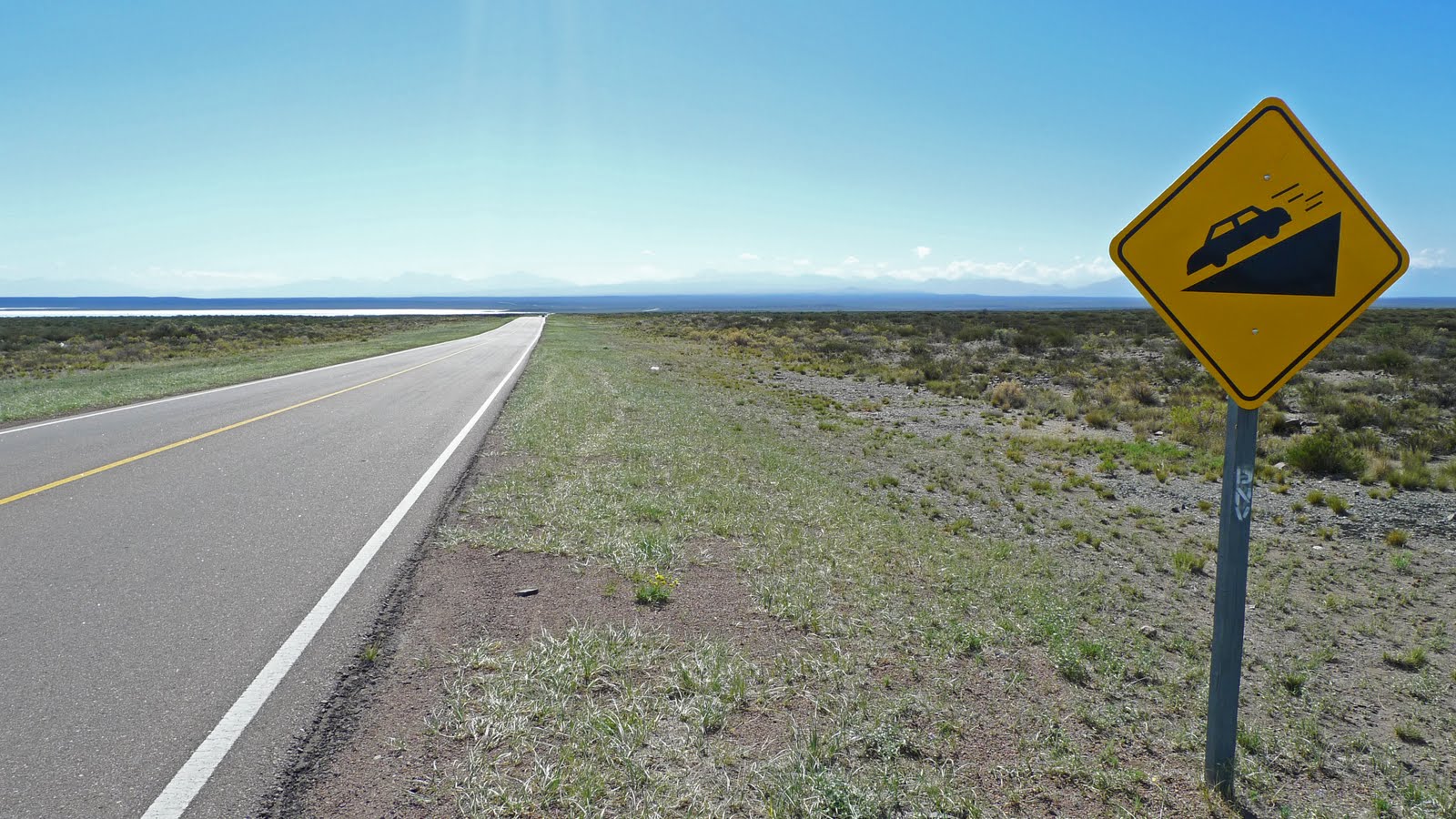 I think this means go fast downhill . . . I like it but not much of a hill - sign must have been put up by flatlanders.
 After San Rafael the country becomes pretty dry with small towns spread out. Camping is easy beside the road if you can find shelter from the wind but water is scarce.
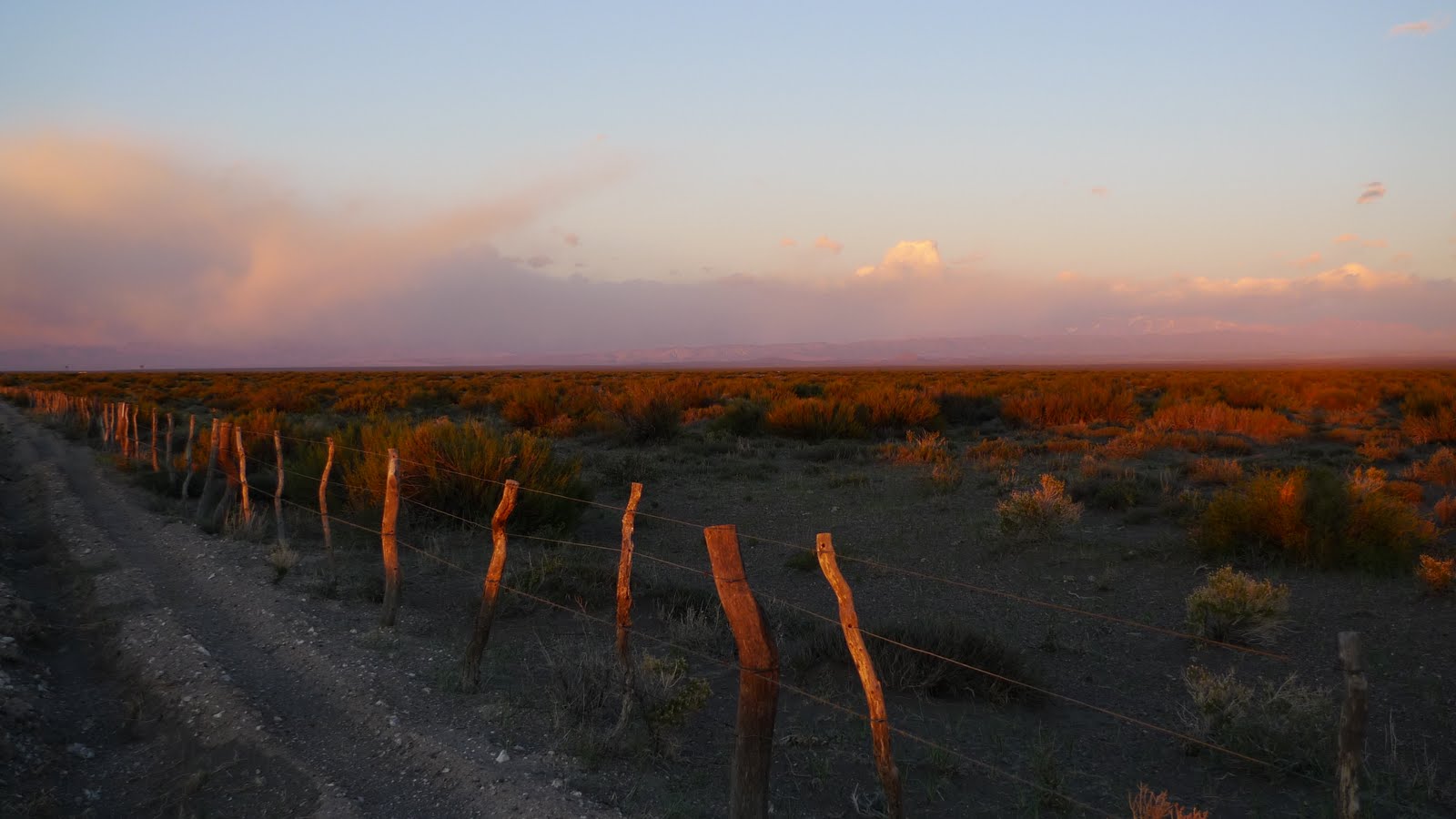 However, I had more Argentinians stop to offer me water, cold soda and ask if I needed anything in two days than the entire two months in Chile - good thing I needed it - like I didn't need it in the Atacama . . . Along the way folks began telling me about a couple ahead of me that started in Alaska - eventually I caught up with Harry and Ivana at a roadside shelter where we ducked out of the wind, had breakfast together, and we rode together for the next couple days.
 They have been on the road from Alaska since 2008 - go to http://elmundoenbici.com.
 Also, been running into Argentinian nationals out touring which is a first for any country but evidently bike touring is very popular here - besides the fact that Argentinians like to travel in general.
 They are checking out my bad ass ride!
 Route 40 is the route 66 of Argentina but still the major/only north - south route on this side of the country. However, at times the road turns into a rough dirt road that may have been formally paved but has since been ground back into gravel.
  The rough riding has been the demise of my Schwalbe tires after 15,000+km of hard touring - they got a rest in Peru where I used my mountain bike tires a good deal but I am very impressed with how durable they were.
 I blew a hole straight through the casing and now have it booted and buttressed but it is only a matter of time before the tire blows again and I predict I will be rolling into Bariloche in 600km on my mountain bike tires. Good thing my sister and Matt are coming on vacation to Argentina and can bring me a new pair of tires to finish out the trip - along with some new bike shorts, my fly rod, coffee and peanut butter!
 Patagonia is living up to its reputation for fierce winds but at least they move around so it is not a continual head wind . . . the side winds blow me straight across the road making for strenuous riding wrestling with my handlebars leaning sideways for hours while I barreling down hills at 60+kph waiting for the rear tire to blow again.
 While the country is dry water flows down from the Andes and collects in high valleys or out in the plains.

 Riding along the Rio Grande into northern Patagonia volcanic peaks dominate the scenery and the region has one of the highest concentrations of volcanic cones in the world and at times rivers carve narrow little canyons through lava rock.
  The rivers and lakes are prime fly fishing territory and seems more people here use fly rods than spinning gear - a bit of a switch from home. I am really looking forward to having my fly rod so I can catch some fish because I don't seem to have a clue with spin gear unless I am catching walleye in the Susquehanna River.
  Nevertheless, a beautiful place to camp and I still enjoyed waving my rod around at all the fish swirling on the surface eating something other than what I had to offer. They were obviously feeding on rising nymphs but you cannot imitate those with spinning gear . . . oh my kingdom for a 5wt and nymph rig!
  Eventually, I had to climb up and out of the Rio Grande valley and spent several days looking at the same volcano from all sides as I traversed around it.
 Passing through rolling plains and climbing into high valleys with very few people around.
 Higher up animals are grazing for the summer and in the winter they will be brought back down into the valleys to graze.
 I talked briefly with a gaucho who lamented that a three year dry spell has made grazing difficult and diminished the herds of cattle but I still see lots of goats in the hills.
 I rolled into the green tree filled valley of Chos Malal for a rest day and writing after a 700+ km stretch. Chos Malal is a quiet little city and former provincial capitol but not for over hundred years now. Nevertheless, fairly prosperous due to the energy industry now controlled by the provincial government. I had an interesting conversation with a store clerk who was studying to be provincial police officer - evidently the province has the best pay and benefits for civil servants in Argentina, teachers and police, due to taking control of the energy industry from multinational corporations. Perhaps Peru could take a lesson from the Neuquen Province of Argentina . . .